
Fibre Reinforced Polymer (FRP) and Glass Reinforced Polymer (GRP) are both popular composite building materials. Many builders are turning to FRP and GRP as an alternative to traditional building materials, such as steel, aluminium and timber, due to their superior durability, strength, and resistance to corrosion.
These innovative, composite materials both offer similar properties and benefits and are built on a matrix of polymer resins; however, they use different fibres to reinforce this matrix. The fibres used can make a difference in the suitability for specific applications.
In this article, we will explore the differences between FRP and GRP to help you make informed decisions for your future projects.
FRP: Fibre Reinforced Polymer
Fibre Reinforced Polymer (FRP) is a composite building material constructed from a matrix of polymer resins and reinforced with specific fibres. The term FRP covers a broad range of materials, including:
- Glass Reinforced Polymer (GRP)
- Carbon Fibre Reinforced Polymer (CFRP)
- Aramid Fibre Reinforced Polymer (AFRP)
- Basalt Fibre Reinforced Polymer (BFRP)
Composition
FRP is a broad category that covers a wide range of composite materials reinforced with fibres, such as glass, carbon, graphite, basalt, Kevlar, Nomex and more. FRP can also be composed of a range of different polymer resins, including Orthophthalic, Isophthalic, Vinyl Ester, Phenolic resins, and more.
The blend of resin and fibres used can determine the properties of the material, including its flexibility, chemical resistance, electrical conductivity and thermal properties.
Benefits
Fibre Reinforced Polymer (FRP) offers a wide range of benefits for building projects, including:
- Lightweight and High Strength: FRP has an exceptional strength-to-weight ratio. It is significantly lighter than traditional materials like steel, while offering similar, if not superior, strength.
- Corrosion Resistant: FRP is highly resistant to damage and deterioration from harsh chemicals, moisture, saltwater, UV rays, and pests such as termites, ensuring long-term durability.
- Low Maintenance: FRP requires little to no maintenance thanks to its resistance to damage from weathering, pests, and corrosive environments.
- Enhanced Safety: FRP is non-conductive, making it a safe solution for electrical sites. It is also available with slip-resistant finishes, minimising slip risks, even when wet.
- Product Range: FRP materials can be constructed and tailored to meet exact measurements and requirements, ensuring builders always have the right materials for the project.
- Reduced Costs: Its lightweight, low-maintenance construction makes this material extremely cost-effective. Save on shipping, repairs, manual labour, and replacements.
- Sustainability: FRP requires less energy for production than traditional materials, and it is also recyclable, supporting greener building projects.
Applications
FRP materials can be used for a variety of construction projects across the industrial, commercial and residential sectors. Some of the most common applications for FRP include:
- Railway infrastructure
- Water Infrastructure
- Jetties and Pontoons
- Fencing and Screening
- Bridges
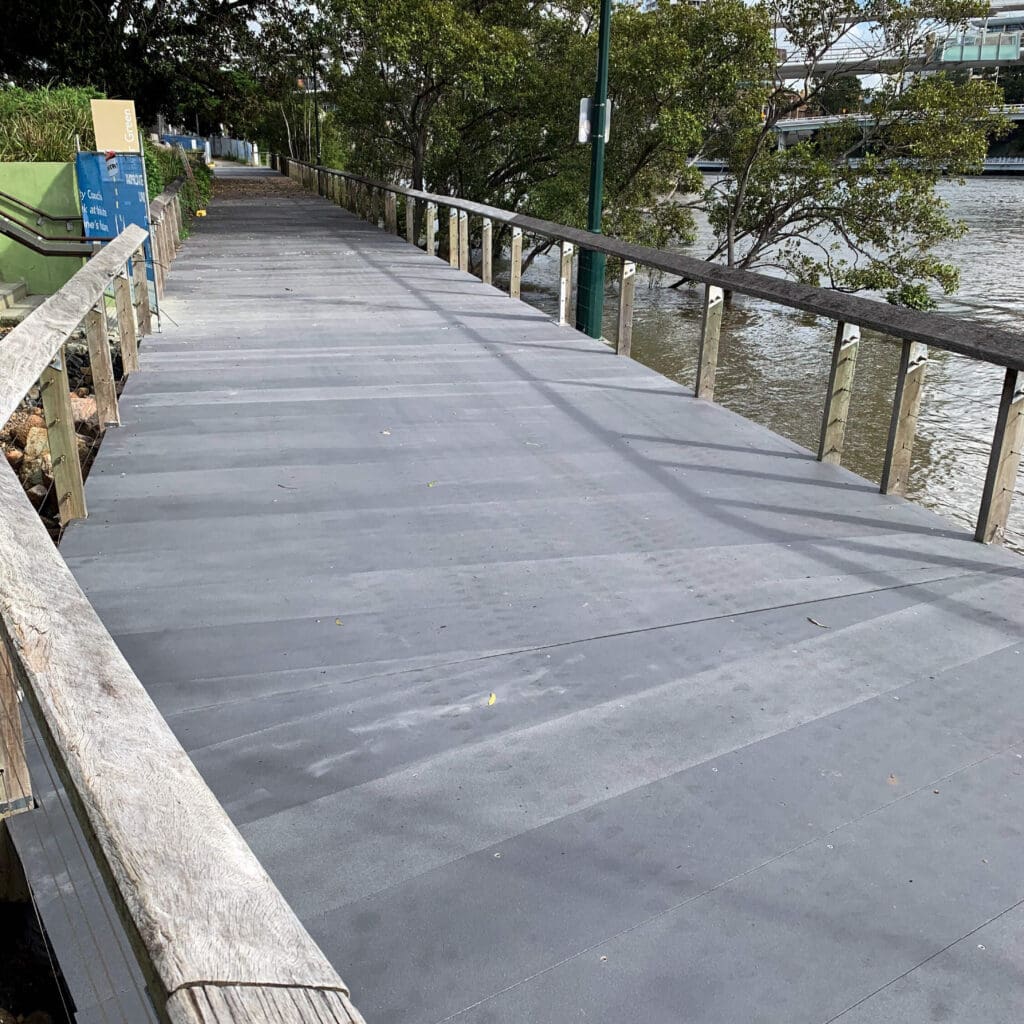
- Boardwalks
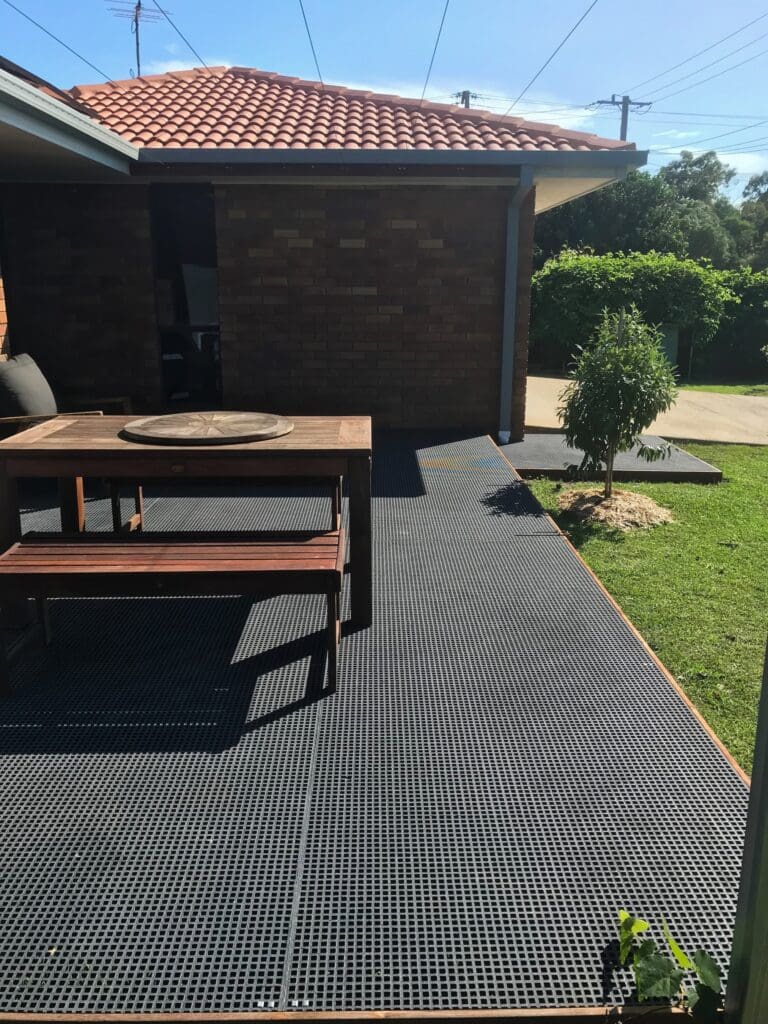
- Decks
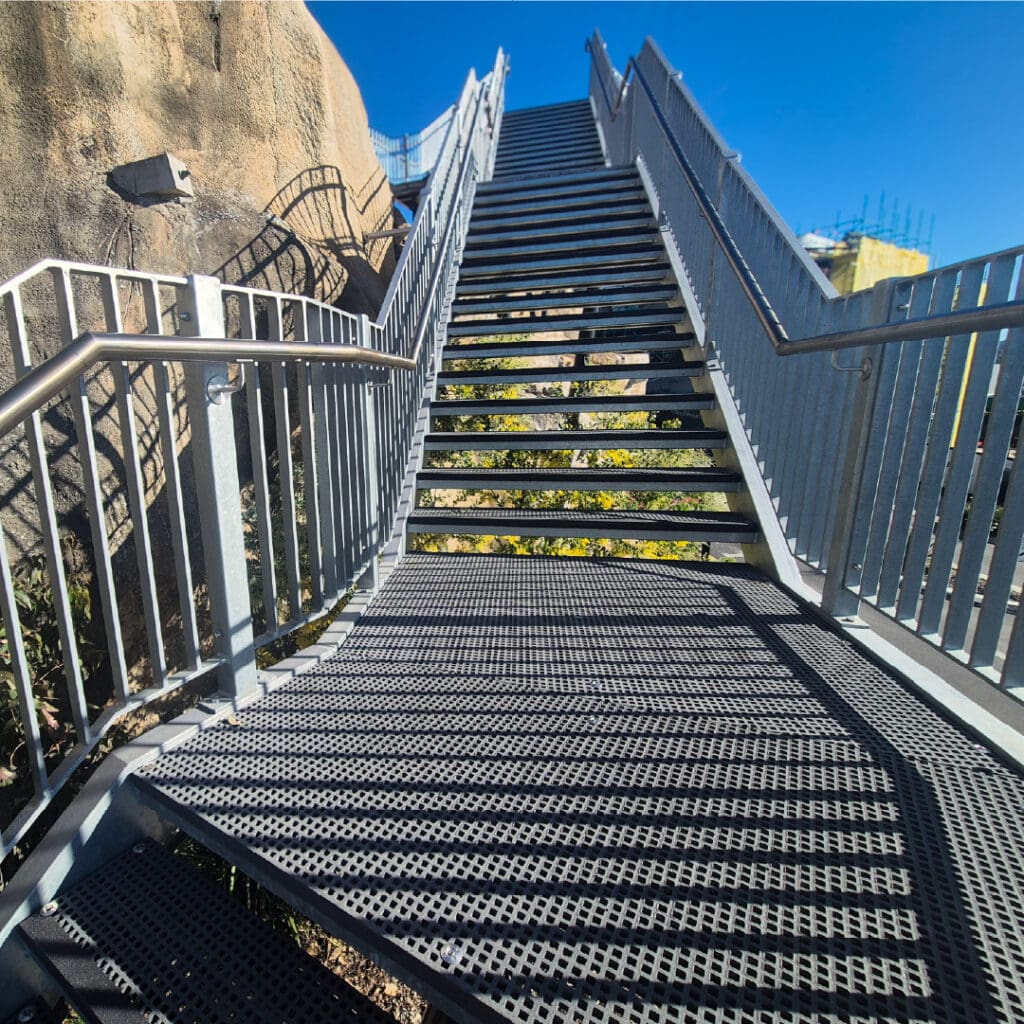
Examples

GRP: Glass Reinforced Polymer
Glass Reinforced Polymer (GRP) – also known as Glass Reinforced Plastic or Fibreglass Reinforced Polymer – is a subset of FRP.
Composition
GRP is composed of a polymer matrix reinforced with strands of fine glass fibres. Glass fibres deliver strength and structural integrity, and the polymer binds it all together to create a strong building structure.
Common glass fibres include E-glass (electrical) and E-CR glass (electrical/corrosion resistance). Like FRP, it can be manufactured from various resin types, such as polyester, vinyl ester and epoxy to deliver specific benefits.
Benefits
While Glass Reinforced Polymer (GRP) offers all the same benefits as FRP, some properties, such as the chemical resistance and strength, are often superior in GRP.
GRP is a strong, durable, and versatile choice for many building projects. Offering a high-strength-to-weight ratio, corrosion resistance, increased safety, sustainability, and low maintenance, all while keeping installation and future maintenance costs down, it is a high-quality alternative to traditional materials. It also stands out for its safe, non-conductive properties.
Furthermore, GRP is also often a more cost-effective alternative upfront, especially when compared to Carbon Fibre Reinforced Plastics (CFRP).
Applications
As with FRP, GRP can be used across residential, commercial, and industrial sectors, offering high-performance solutions for a variety of applications. While it can be used in all of the same fields that FRP can, it especially stands out for environments requiring high-strength, non-conductive solutions that won’t corrode.
Examples
Choosing the Right Material for Your Project
Choosing the right material for your project is not just about whether FRP or GRP is a better product; it’s about understanding your project requirements. Specific projects require specific materials and properties, so it’s important to consider your exact needs when choosing a composite material.
Fibre Reinforced Polymer (FRP) covers a wide range of materials, including GRP, meaning one of the subsets will likely be right for you. Glass Reinforced Polymer (GRP), however, is a specific blend offering its own exceptional strengths.
At GRP Australia, we specialised in GRP products, hence why we named ourselves as such. When you partner with us, you can trust you’ll receive expert advice and high-quality GRP solutions. If you’re not sure which material to choose for your project, contact our experts at GRP.