
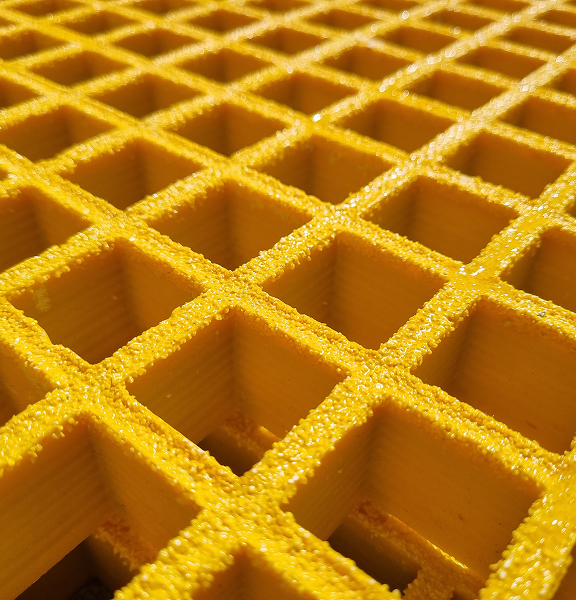
One of the most common misconceptions about FRP is that it’s just plastic. This myth stems from the fact that FRP is commonly referred to interchangeably as both Fibre Reinforced Polymer and Fibre Reinforced Plastic. The truth is, FRP is a heavy-duty composite polymer material.
Beyond the name, though, FRP offers a range of structural benefits that distinguish it from plastic. In this article, we will explore the properties of FRP to explore how it is different from plastic.
What is FRP?
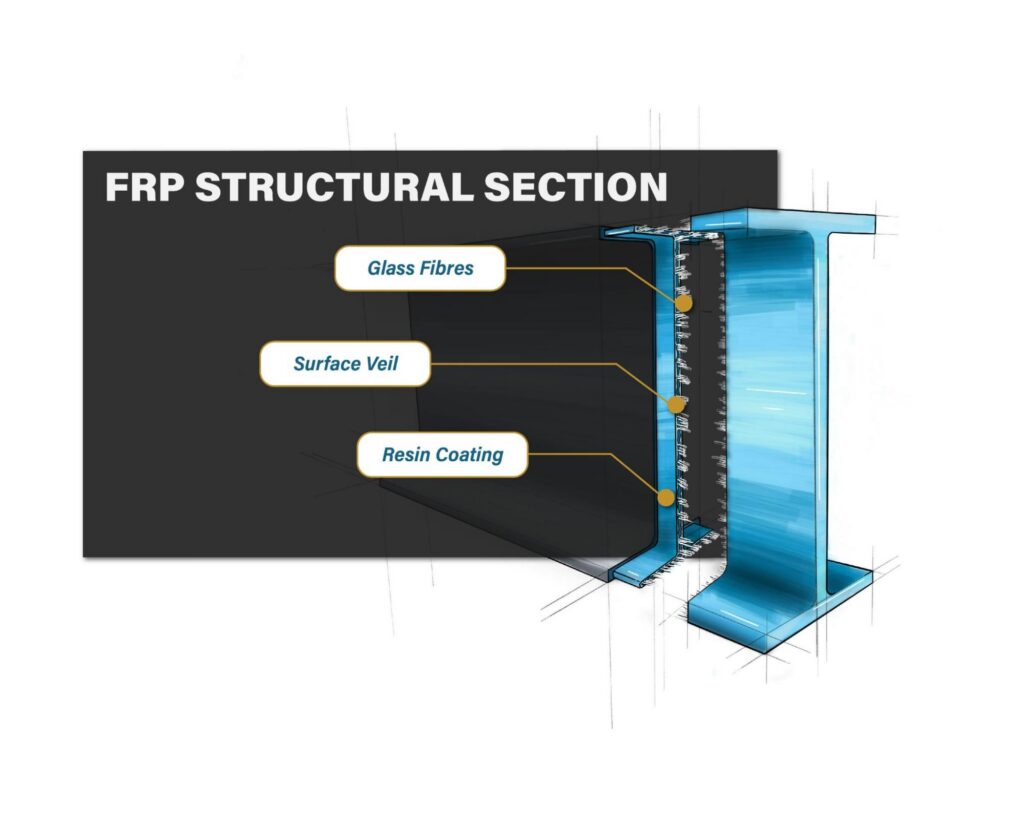
Fibre Reinforced Polymer (FRP) is a heavy-duty composite building material constructed from a polymer resin matrix, reinforced with fibres. FRP can be made from a wide variety of polymer resins, including epoxy, polyester, vinyl ester and reinforced with various fibres, such as glass, carbon, aramid and basalt.
Each specific blend offers unique properties and benefits for specific applications, so it’s important to choose the right FRP material for your project.
What is Plastic?
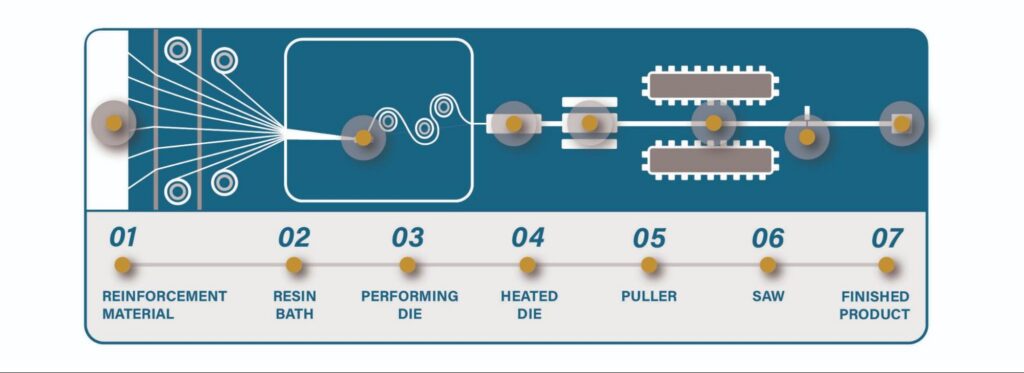
By definition, plastic is a synthetic material made from a range of organic polymers that can be moulded into a specific shape. It is this logic that causes FRP to be categorised as plastic. This, however, is a major simplification.
While a polymer can make plastic, when reinforced with high-strength fibres, it can gain significantly more strength and durability.
Standard plastics or thermoplastics are traditionally a great choice for low-cost, low-stress, high-volume moulded applications. This is because plastic is generally cost-effective to shape and produce in bulk. However, many plastics can become brittle when exposed to harsh conditions, such as UV rays, temperature extremes and fluctuations, heavy loads and use, and certain chemicals.
Structural Capabilities of FRP
Unlike standard plastics, Fibre Reinforced Polymer (FRP) is engineered to withstand extreme conditions, delivering superior performance. FRP offers strength comparable to many metals while maintaining the lightweight construction of plastic. It is also extremely resistant to corrosion or damage from moisture, sunlight, chemicals, and heavy use. Furthermore, FRP can be moulded into specific shapes to suit specific applications and maintain its structural integrity under heavy use and demanding conditions with little to no upkeep.
These properties make it a popular alternative to traditional building materials such as standard plastic, timber and steel for heavy-duty applications. FRP is becoming increasingly popular for a wide range of residential, commercial and industrial projects, such as decks, fencing, and bridges. It is also commonly used for railway, water, and marine infrastructure, where standard plastics and other traditional building materials corrode and degrade.
Other Common FRP Myths
Since its introduction, FRP has been subject to a variety of myths and misconceptions, causing builders and designers to be sceptical about using it for their projects. We’re here to bust a few more common myths about this innovative material.
- FRP is Just Plastic: As we’ve explored in this article, FRP is in fact a high-performance composite material combining reinforced fibres and a robust polymer resin matrix. This construction offers superior strength, durability and long-lasting structural capabilities over standard plastics.
- FRP is Weak: FRP is engineered to be extremely durable and robust even in the harshest conditions. It is designed to withstand heavy loads, use and extreme environments, including moisture, sunlight and chemical exposure without compromising its structural integrity.
- FRP is Expensive: While you can find cheaper timber options, FRP is quite competitively priced and offers superior longevity. Needing no maintenance and lasting longer than other materials, FRP is a cost-effective long-term investment.
- FRP Can’t Handle Heavy Loads: Offering high strength-to-weight ratios, FRP offers load-bearing capabilities equivalent to many metals.
- Installation is Very Complex: With its lightweight design, FRP is simple to handle and install in a range of environments and applications. It can also be tailored to specific project requirements, further supporting simple and efficient installation.
FRP Over Traditional Plastics
While commonly referred to as Fibre Reinforced Plastic, FRP is a heavy-duty composite polymer material, offering superior structural strength, durability, and capabilities over standard plastics and other traditional building materials. This innovative solution is becoming an increasingly popular choice for homeowners, businesses and councils, thanks to its high-performance, low-maintenance, and long-lasting design.
Need a reliable, durable building solution for your next project? GRP Australia offers a wide range of high-quality FRP solutions for diverse sectors and applications. Contact us today for tailored advice and find the right solution for your project.